Every animal in Worml
The complete roster, with the range each one is drawn from, the habitat it lives in, and the photographer credited for every photograph.
- Species
- 211
- Countries covered
- 151
- Worm Wednesday
- 34
Ranges span mammals, birds, reptiles, amphibians, insects, arachnids and freshwater fish — from animals almost everyone can place to endemics confined to a single valley, cave or island. Difficulty here describes how guessable a species is rather than how small its range is: a koala lives in one country and is easy, an okapi lives in one country and is not.
How the ranges were compiled
Each range is a list of countries a species is native to, drawn from IUCN Red List range descriptions and Wikipedia taxobox maps, then reduced to whole countries. That reduction is lossy and deliberate — see about the data for what it does and does not represent, and why introduced populations are excluded.
The roster
-

Aardvark medium
Orycteropus afer
The sole survivor of its entire order, and a keystone digger — its abandoned burrows house warthogs, hyenas, owls and snakes. Read more →
-

Addax impossible
Addax nasomaculatus
A desert antelope that may never drink, getting all its water from plants, and possibly fewer than 100 remain in the wild.
-

African Bush Elephant easy
Loxodonta africana
The largest land animal alive. Botswana alone holds roughly a third of the continent's remaining savanna elephants.
-

African Lungfish hard
Protopterus annectens
When its swamp dries out it burrows into mud, secretes a mucus cocoon and breathes air — surviving for months, sometimes years, until the rains return.
-

African Penguin medium
Spheniscus demersus
The only penguin that breeds on the African continent, on cold Atlantic-facing coasts fed by the Benguela current.
-

Alpine Ibex hard
Capra ibex
Famous for climbing near-vertical dam walls to lick salt. Every animal alive descends from one surviving Italian population.
-

Amami Rabbit impossible
Pentalagus furnessi
A dark, short-eared living fossil found on two small islands, resembling rabbits that died out on the mainland millions of years ago.
-

American Bison easy
Bison bison
Reduced from tens of millions to a few hundred animals by 1889, and brought back from that to roughly half a million today. Read more →
-

Andean Bear medium
Tremarctos ornatus
South America’s only bear, named for the pale rings around its eyes, and the last surviving short-faced bear.
-

Andean Condor medium
Vultur gryphus
One of the largest flying birds in the world, riding mountain thermals along the spine of a single continent.
-

Annamite Striped Rabbit impossible
Nesolagus timminsi
Boldly striped and only described in 2000, known mostly from camera traps and animals found in bushmeat markets.
-

Arabian Oryx hard
Oryx leucoryx
Hunted to extinction in the wild by 1972, then reintroduced from captive herds — the first animal ever downlisted from Extinct in the Wild.
-

Arapaima medium
Arapaima gigas
One of the largest freshwater fish alive, up to 3 metres. It breathes air, gulping at the surface, which lets it survive oxygen-poor floodplain pools. Read more →
-

Arctic Fox medium
Vulpes lagopus
Its winter coat is the warmest fur of any mammal. It is the only land mammal native to one North Atlantic island nation. Read more →
-

Asian Arowana hard
Scleropages formosus
Considered a luck-bringing "dragon fish"; individual specimens have sold for tens of thousands of dollars, which has hammered the wild population.
-

Asian Elephant medium
Elephas maximus
Smaller-eared than its African cousins, and the only elephant ever widely tamed for work.
-

Atlantic Puffin medium
Fratercula arctica
Spends most of the year far out at sea, coming ashore only to breed in clifftop burrows. Over half nest on one volcanic island. Read more →
-

Atlantic Salmon medium
Salmo salar
Hatches in gravel riverbeds, crosses an ocean, and navigates back to the river of its birth to spawn — by smell, over thousands of kilometres.
-

Atlas Moth medium
Attacus atlas
One of the largest moths in the world by wing area. The adult has no mouth and lives about two weeks on fat stored as a caterpillar.
-

Axolotl hard
Ambystoma mexicanum
Stays in its larval form for life and regrows lost limbs. Wild animals survive only in the remnants of one lake system. Read more →
-

Aye-aye hard
Daubentonia madagascariensis
Taps on wood, listens for hollows, then hooks grubs out with an elongated middle finger — a woodpecker's job done by a primate. Read more →
-

Babirusa impossible
Babyrousa celebensis
The male’s upper tusks grow straight up through the snout, curving back toward the skull — and can pierce it if never worn down.
-

Bagheera Kiplingi impossible
Bagheera kiplingi
The only spider known to be largely vegetarian, living on the protein nubs acacias grow to feed ants. Named after the panther in The Jungle Book.
-

Bald Eagle easy
Haliaeetus leucocephalus
A North American fish eagle whose breeding range runs from Alaska to northern Mexico, always close to large bodies of open water.
-

Banded Sea Krait hard
Laticauda colubrina
Hunts eels underwater but returns to land to digest, shed and lay eggs — a sea snake that never fully left the shore.
-

Banggai Cardinalfish impossible
Pterapogon kauderni
Restricted to one small island group. Males brood the eggs in their mouths, and the young emerge as miniature adults rather than drifting larvae.
-

Beluga Sturgeon hard
Huso huso
Can live over a century and exceed a tonne. Its roe is sold as beluga caviar, which is most of why it is now critically endangered.
-
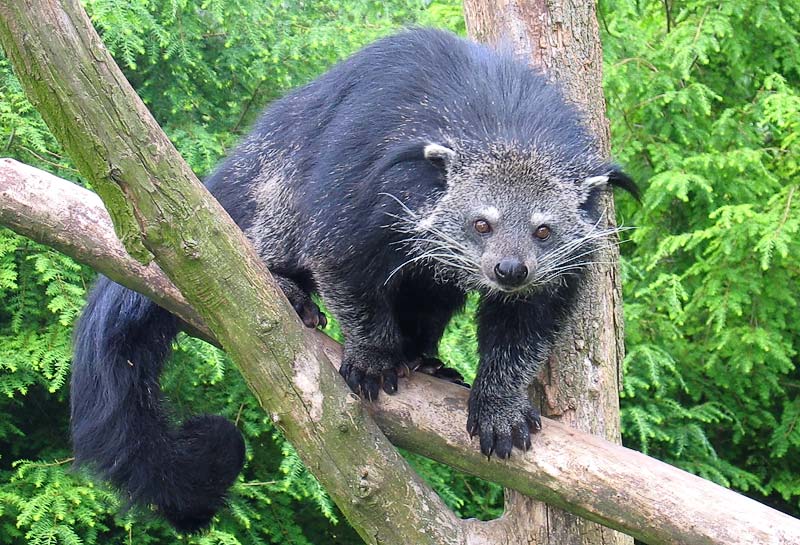
Binturong hard
Arctictis binturong
A tree-dwelling civet with a prehensile tail that smells strongly of buttered popcorn — a real compound in its scent marking.
-

Black Mamba medium
Dendroaspis polylepis
Named for the ink-black inside of its mouth, not its skin, which is olive to grey. The fastest snake on land at around 16 km/h.
-

Black Rhinoceros medium
Diceros bicornis
Poaching cut the population by 98% between 1960 and 1995. It is browsing, hook-lipped, and no more black than the white rhino is white.
-

Bongo hard
Tragelaphus eurycerus
The largest forest antelope, chestnut with white stripes, and the only one where both sexes grow spiralled horns.
-

Boomslang medium
Dispholidus typus
Enormous eyes for a snake and a rear-fanged bite whose effects can take hours to appear, which has killed herpetologists who assumed they were fine.
-

Bootlace Worm hard
Lineus longissimus
Arguably the longest animal on Earth — one specimen was recorded at over 55 metres. It secretes a potent neurotoxin in its mucus.
-

Brown Bear easy
Ursus arctos
The most widely distributed bear, taking in grizzlies, Kodiaks, Eurasian brown bears and the Himalayan subspecies.
-

Brown-throated Sloth medium
Bradypus variegatus
Moves so slowly that algae grows in its fur, providing camouflage and a home for moths that live nowhere else.
-

Bushmaster hard
Lachesis muta
The longest venomous snake in the Americas at up to 3 m, and the only New World pit viper that lays eggs rather than bearing live young.
-

Caecilian hard
Gymnophiona
A limbless burrowing amphibian, not a worm or a snake. Some species feed their young on a specially grown outer layer of their own skin.
-

Capybara medium
Hydrochoerus hydrochaeris
The world's largest rodent, semi-aquatic and highly social, spread across the wetlands of most of a continent. Read more →
-

Cheetah medium
Acinonyx jubatus
The fastest land animal. A tiny relict population of the Asiatic subspecies clings on far outside its African range. Read more →
-

Chimpanzee medium
Pan troglodytes
Our closest living relative alongside the bonobo, spread in a broad band across equatorial Africa.
-

Chinese Giant Salamander hard
Andrias davidianus
The largest amphibian in the world at up to 1.8 m, breathing entirely through its skin and largely unchanged for 170 million years.
-

Coelacanth impossible
Latimeria chalumnae
Believed extinct for 66 million years until one turned up in a South African fish market in 1938. It has a hinged skull and a hollow, oil-filled notochord. Read more →
-
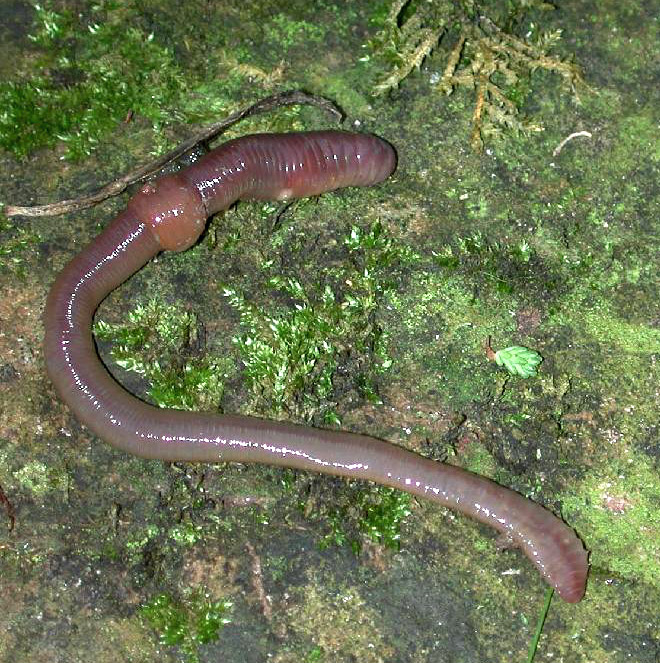
Common Earthworm medium
Lumbricus terrestris
European by origin, though it has been carried almost everywhere by agriculture. In parts of North America it is an invasive that reshapes forest soil. Read more →
-

Cuban Solenodon impossible
Solenodon cubanus
A venomous insectivore so rarely seen it was twice presumed extinct. Only a handful have ever been caught alive.
-

Devils Hole Pupfish impossible
Cyprinodon diabolis
The entire wild population lives in one limestone pool in the Mojave — the smallest natural range of any vertebrate. Often fewer than 200 individuals.
-

Dhole medium
Cuon alpinus
An Asian wild dog that hunts in packs and communicates with an eerie whistle rather than a howl.
-

Dugong medium
Dugong dugon
A strictly vegetarian marine mammal that grazes seagrass meadows, and the most likely origin of the mermaid legend.
-

Eastern Brown Snake medium
Pseudonaja textilis
The second most venomous land snake in the world, and unusually willing to live alongside people in farmland and suburbs.
-

Eastern Diamondback Rattlesnake medium
Crotalus adamanteus
The heaviest venomous snake in the Americas, restricted to the pine flatwoods and coastal plain of the southeastern states.
-

Electric Eel medium
Electrophorus electricus
Not an eel at all but a knifefish, and able to discharge 860 volts — the strongest of any known animal. Read more →
-

Emperor Penguin medium
Aptenodytes forsteri
The only bird that breeds through the depths of the polar winter, on fast ice around a continent with no permanent human population. Read more →
-

Epaulette Shark hard
Hemiscyllium ocellatum
Walks between tide pools on its fins and can survive an hour without oxygen by shutting down parts of its own brain.
-

European Adder medium
Vipera berus
The most widely distributed venomous snake on Earth, reaching inside the Arctic Circle — further north than any other snake.
-

European Bison hard
Bison bonasus
Extinct in the wild by 1927 and rebuilt from 12 zoo animals. Its stronghold is a single ancient forest straddling a border.
-

European Eel medium
Anguilla anguilla
Every one of them is born in the Sargasso Sea, drifts years across the Atlantic as a transparent larva, then returns there to spawn and die.
-

European Glass Lizard hard
Pseudopus apodus
The largest legless lizard, up to 1.4 metres. Look closely and you can still see the vestigial hind limbs either side of the vent.
-

European Hedgehog medium
Erinaceus europaeus
Carries around 5,000 spines and hibernates through the winter. A garden favourite across its home continent.
-

European Medicinal Leech medium
Hirudo medicinalis
Has three jaws, a hundred teeth, and is still used in reconstructive surgery to restore blood flow to grafted tissue.
-

Fennec Fox medium
Vulpes zerda
The smallest fox in the world, with ears that shed heat and can hear prey moving under the sand. Read more →
-

Flying Dragon hard
Draco volans
Extends ribs into wings and glides up to 8 metres between trunks. It descends to the ground only to lay eggs.
-

Fossa hard
Cryptoprocta ferox
The island's top predator, a cat-like relative of the mongoose that hunts lemurs through the canopy.
-

Gaboon Viper medium
Bitis gabonica
The longest fangs of any snake at 5 cm, and a leaf-litter pattern so effective that it is usually trodden on rather than seen.
-

Galápagos Giant Tortoise hard
Chelonoidis niger
Restricted to the Galápagos archipelago, which sits about 900 km off the coast of the country that governs it.
-

Gelada hard
Theropithecus gelada
The only surviving grass-grazing primate, living in herds of hundreds on high plateaus and sleeping on cliff ledges.
-

Gharial hard
Gavialis gangeticus
A fish-eating crocodilian with a needle-thin snout; the male grows a bulbous pot on the tip that he buzzes through to attract females. Read more →
-

Giant Gippsland Earthworm hard
Megascolides australis
Reaches three metres and makes an audible gurgling as it moves through its burrow. Confined to a few hundred square kilometres of one river catchment.
-

Giant Golden-Crowned Flying Fox hard
Acerodon jubatus
One of the largest bats in the world, with a wingspan over 1.5 m. It eats only figs and other fruit, never blood or insects.
-

Giant Panda easy
Ailuropoda melanoleuca
Wild pandas survive in a handful of mountain ranges in Sichuan, Shaanxi and Gansu, eating bamboo for up to 14 hours a day. Read more →
-

Giant Pangolin hard
Smutsia gigantea
The largest pangolin, walking on its knuckles to protect the claws it digs with. Pangolins are the most trafficked wild mammals on Earth.
-

Giant Water Bug hard
Lethocerus grandis
Ambushes fish and frogs larger than itself, and is nicknamed the toe-biter for the intensely painful defensive bite it gives waders.
-

Giant Wētā impossible
Deinacrida heteracantha
One of the heaviest insects on Earth at up to 70 g, heavier than a sparrow. Survives only on predator-free offshore islands.
-

Giraffe easy
Giraffa camelopardalis
Now patchily distributed across sub-Saharan Africa, with a small isolated population of West African giraffe surviving in Niger. Read more →
-

Giraffe Weevil impossible
Trachelophorus giraffa
The male's neck is three times longer than the female's, used to wrestle rivals and to roll a leaf into a tube for a single egg.
-

Gladiator Insect impossible
Tyrannophasma gladiator
Belongs to Mantophasmatodea, the first new insect order described in over 85 years, recognised only in 2002 — and this one lives on a single massif.
-

Golden Dorado hard
Salminus brasiliensis
A golden, bone-jawed river predator that leaps clear of the water when hooked. Not related to the saltwater fish of the same name.
-

Golden Emperor Moth hard
Loepa katinka
Deep yellow wings each carrying a transparent window-like eyespot, flown at night in Himalayan foothill forest.
-

Golden Snub-Nosed Monkey hard
Rhinopithecus roxellana
Endures snowbound winters at higher altitude than almost any other primate, surviving largely on lichen when nothing else is available.
-

Goliath Beetle hard
Goliathus goliatus
Among the heaviest insects alive — larvae reach 100 g, more than a blackbird — yet the adults fly strongly and feed mostly on tree sap and fruit.
-

Goliath Tigerfish hard
Hydrocynus goliath
Reaches 50 kg with 32 interlocking fangs, and is one of very few freshwater fish reported to take birds off the surface.
-

Gorilla medium
Gorilla gorilla / Gorilla beringei
Two species in two separate regions: western gorillas in the Congo basin, eastern gorillas in the Albertine Rift.
-

Gray Wolf easy
Canis lupus
Once the most widely distributed land mammal after humans. This is a representative slice of a range that spans the northern hemisphere. Read more →
-

Greater Bilby hard
Macrotis lagotis
A burrowing, rabbit-eared marsupial whose spiral tunnels shelter dozens of other desert species. Chocolate bilbies are sold at Easter in its defence.
-

Green Anaconda medium
Eunectes murinus
The heaviest snake on Earth, spending most of its life in slow-moving water where its bulk is no burden.
-

Hellbender hard
Cryptobranchus alleganiensis
A 60 cm aquatic salamander that breathes through folds of loose skin. It needs water so clean that its decline maps onto river pollution.
-

Hercules Beetle medium
Dynastes hercules
Can lift over 100 times its own body weight. The male is more than half horn, used to lever rivals off branches.
-

Hippopotamus easy
Hippopotamus amphibius
Spends the day submerged and grazes on land at night. Its closest living relatives are whales and dolphins. Read more →
-
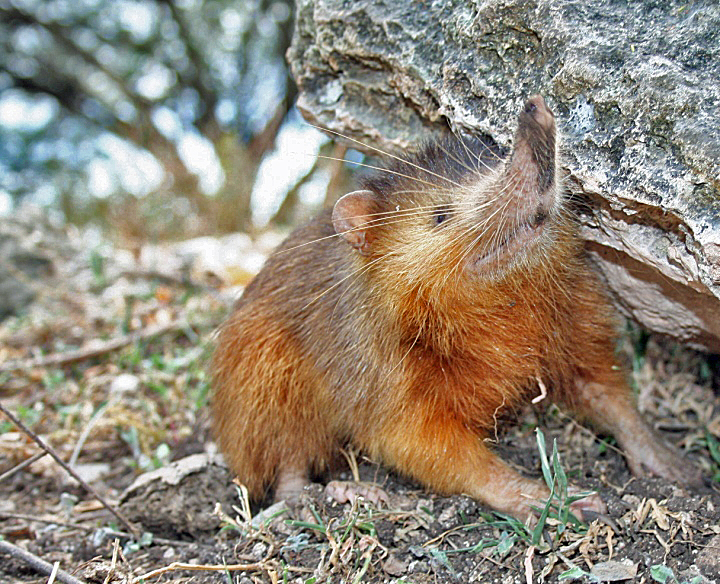
Hispaniolan Solenodon impossible
Solenodon paradoxus
One of very few venomous mammals, delivering toxin through grooved teeth. Its lineage split from all other mammals around 78 million years ago.
-

Hoatzin hard
Opisthocomus hoazin
Ferments leaves in an enlarged crop like a cow, which makes it smell strongly enough to be called the stinkbird. Its chicks have wing claws. Read more →
-

Iberian Lynx hard
Lynx pardinus
Down to fewer than 100 animals in 2002 and confined to one peninsula; intensive rewilding has since pushed it past 2,000. Read more →
-

Ibisbill impossible
Ibidorhyncha struthersii
Grey, crimson-billed and almost invisible against river shingle. It has no close relatives and sits alone in its own family.
-
No freely licensed photograph of this species exists
Ili Pika impossible
Ochotona iliensis
Discovered in 1983 and photographed alive only a handful of times since — so rarely that no freely licensed picture of one exists. Fewer than 1,000 are thought to remain on remote high cliffs.
-

Indian Peafowl medium
Pavo cristatus
The peacock's train isn't its tail — it's elongated upper covert feathers, moulted and regrown every year.
-

Indri hard
Indri indri
The largest living lemur, and it sings — eerie wailing duets that carry for kilometres and are used to hold territory.
-

Inland Taipan hard
Oxyuranus microlepidotus
The most venomous snake in the world by median lethal dose, and so reclusive in its remote floodplain range that almost nobody is ever bitten.
-

Jaguar medium
Panthera onca
The only big cat in the Americas. Over half its remaining range lies in the Amazon basin of a single country. Read more →
-

Japanese Eel hard
Anguilla japonica
Spawns west of the Mariana Islands and migrates thousands of kilometres to East Asian rivers. Served grilled as unagi.
-

Japanese Macaque medium
Macaca fuscata
The northernmost non-human primate in the world, and the one famous for bathing in volcanic hot springs.
-

Javan Rhinoceros hard
Rhinoceros sondaicus
Fewer than 80 survive, every one of them in a single national park — the rarest large mammal on Earth.
-

Kagu impossible
Rhynochetos jubatus
A near-flightless grey forest bird with no close relatives, endemic to one Pacific island. Its dawn duet carries for over a kilometre.
-
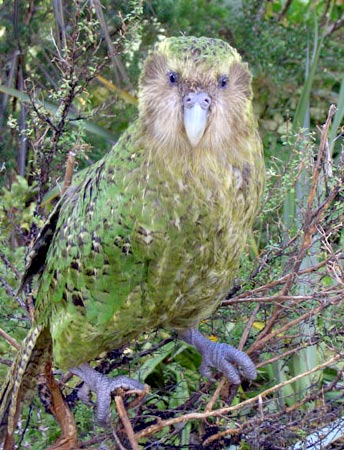
Kākāpō hard
Strigops habroptilus
A flightless, nocturnal, ground-booming parrot. Every surviving bird is individually named and tracked. Read more →
-

King Cobra medium
Ophiophagus hannah
The longest venomous snake in the world, and the only one that builds a nest for its eggs. It eats mostly other snakes. Read more →
-

Kipunji impossible
Rungwecebus kipunji
Described in 2005, the first new African monkey genus in 83 years. It gives a loud honk-bark unlike any other primate call.
-

Kiwi easy
Apteryx spp.
A flightless nocturnal bird with nostrils at the tip of its beak, endemic to one island nation and its offshore islands. Read more →
-

Koala easy
Phascolarctos cinereus
Restricted to the eucalypt forests of the eastern and southeastern seaboard, where it sleeps up to 20 hours a day. Read more →
-

Komodo Dragon medium
Varanus komodoensis
The world's largest lizard lives on just five islands in the Lesser Sunda chain — Komodo, Rinca, Flores, Gili Motang and Padar. Read more →
-

Lake Titicaca Frog hard
Telmatobius culeus
Hangs in baggy folds of excess skin that let it absorb oxygen from cold, thin, high-altitude water without ever surfacing.
-

Lantern Fly hard
Pyrops candelaria
The long red snout was once believed to glow, which it does not. It feeds by tapping sap from longan and lychee trunks.
-

Leaf Insect hard
Phyllium bioculatum
Mimics a leaf down to fake bite-marks and brown edge blotches, and sways as it walks to imitate a leaf moving in the breeze.
-

Leafy Seadragon impossible
Phycodurus eques
Camouflaged as drifting seaweed down to the way it sways. Found only along one stretch of southern coast, and the male carries the eggs. Read more →
-

Lion medium
Panthera leo
Overwhelmingly African — but a last population of a few hundred Asiatic lions survives in the Gir Forest of India.
-

Lord Howe Island Stick Insect impossible
Dryococelus australis
Wiped out by rats and presumed extinct for 80 years, until 24 were found on a single shrub on a sea stack 20 km offshore.
-

Lowland Streaked Tenrec impossible
Hemicentetes semispinosus
The only mammal known to stridulate: it rubs specialised quills together to make a high-pitched note that keeps its family group in contact.
-

Lugworm medium
Arenicola marina
The coiled casts dotted across a low-tide beach are its droppings. Its haemoglobin binds oxygen so well it is being researched for organ preservation.
-

Madagascar Hissing Cockroach medium
Gromphadorhina portentosa
Forces air through its breathing holes to hiss — one of very few insects that make sound that way rather than by rubbing body parts together.
-

Maleo impossible
Macrocephalon maleo
Buries its enormous eggs in volcanically heated sand and walks away. The chick digs itself out and can fly the same day.
-

Maned Wolf medium
Chrysocyon brachyurus
Neither wolf nor fox but its own genus, on stilt-like legs for seeing over tall grass. Roughly half its diet is fruit.
-

Marine Iguana medium
Amblyrhynchus cristatus
The only lizard that forages in the sea, grazing algae on subtidal rock and sneezing out the excess salt through nasal glands.
-

Markhor hard
Capra falconeri
A wild goat with corkscrew horns up to 1.6 m long, climbing near-vertical crags. It is the national animal of one of its range countries.
-

Matamata hard
Chelus fimbriata
Looks like a pile of bark and dead leaves. It hunts by suddenly opening its mouth, inhaling fish whole with the rush of water.
-

Meerkat medium
Suricata suricatta
Lives in cooperative groups where individuals take turns standing sentry while the rest forage. Read more →
-

Mekong Giant Catfish hard
Pangasianodon gigas
Grows to 300 kg on a diet of algae and plants. Confined to one river system, where dams have cut it off from its spawning grounds.
-

Mexican Mole Lizard impossible
Bipes biporus
A pink burrowing reptile with no hind legs at all and two small mole-like forelimbs just behind the head, used to dig through loose soil.
-

Mexican Tetra hard
Astyanax mexicanus
The same species exists as a normal river fish and as blind, unpigmented cave populations — which is why it is a workhorse of evolutionary biology.
-

Moose medium
Alces alces
The largest deer alive, circumboreal in distribution — and called an elk on one side of the Atlantic.
-

Mossy Leaf-Tailed Gecko hard
Uroplatus fimbriatus
A fringe of skin along its body erases its own shadow against bark, so there is no outline to see even in daylight.
-

Mountain Pygmy Possum impossible
Burramys parvus
Known only from fossils until a live one turned up in a ski lodge in 1966. It hibernates under snow and depends on a single migrating moth for food.
-

Narwhal medium
Monodon monoceros
The tusk is a spiralled canine tooth packed with nerve endings. Its range is limited to the high Atlantic Arctic. Read more →
-

Nile Perch medium
Lates niloticus
Native to the Nile, Chad, Niger and Senegal basins. Its introduction to Lake Victoria — outside this range — drove hundreds of cichlid species extinct.
-

Numbat hard
Myrmecobius fasciatus
A striped marsupial that eats up to 20,000 termites a day, licked up with a tongue longer than its own head.
-

Oilbird impossible
Steatornis caripensis
The only nocturnal fruit-eating bird, and one of very few that echolocates — audibly, in clicks, inside pitch-black caves.
-

Okapi hard
Okapia johnstoni
The giraffe's only living relative, unknown to science until 1901 and endemic to one country's rainforest. Read more →
-

Olm impossible
Proteus anguinus
A blind, pale cave salamander that keeps its larval gills for life, can go a decade without food, and may live over 100 years. Read more →
-

Onager impossible
Equus hemionus onager
A wild ass of the central Asian deserts, fast enough to outrun most predators and never successfully domesticated.
-

Orangutan medium
Pongo spp.
The only great apes outside Africa, now confined to two islands — Borneo, which is split between countries, and Sumatra.
-

Orchid Mantis medium
Hymenopus coronatus
Its legs are shaped like petals. It does not hide on flowers so much as out-attract them — pollinators approach the mantis in preference to real blooms.
-

Panamanian Golden Frog hard
Atelopus zeteki
Waves a forelimb to signal over the roar of streams too loud for calling. Almost certainly extinct in the wild, surviving in captive assurance colonies.
-
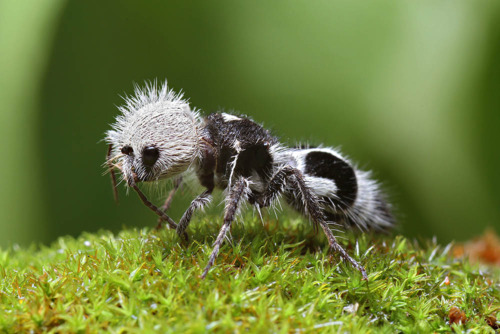
Panda Ant impossible
Euspinolia militaris
Not an ant but a wingless wasp, patterned black and white. The sting is severe enough that the family is nicknamed cow killers.
-

Panther Chameleon medium
Furcifer pardalis
Colour varies so strongly between populations that individuals from different valleys look like separate species.
-

Paradise Flying Snake hard
Chrysopelea paradisi
Flattens its body into a ribbon and undulates through the air, gliding between trees further than most gliding mammals manage.
-
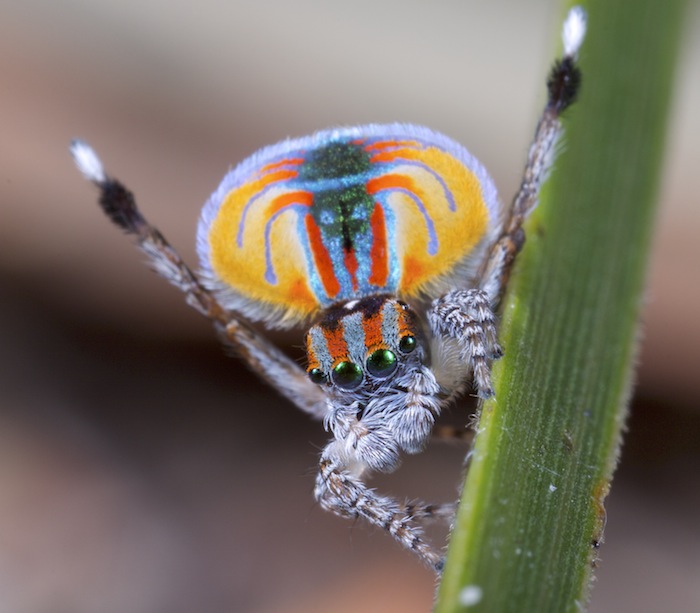
Peacock Spider hard
Maratus volans
Five millimetres long. The male raises an iridescent abdominal flap and waves his legs in a courtship dance, and is eaten if he gets it wrong.
-

Philippine Tarsier hard
Carlito syrichta
Each eyeball is as large as its brain and cannot move, so it swivels its head almost 180 degrees instead.
-

Pichi impossible
Zaedyus pichiy
The only armadillo that truly hibernates. Threatened, it digs in and wedges its serrated shell against the burrow walls.
-

Pig-Nosed Turtle hard
Carettochelys insculpta
The only freshwater turtle with true flippers, and a fleshy snorkel-like snout it uses to breathe while staying submerged.
-
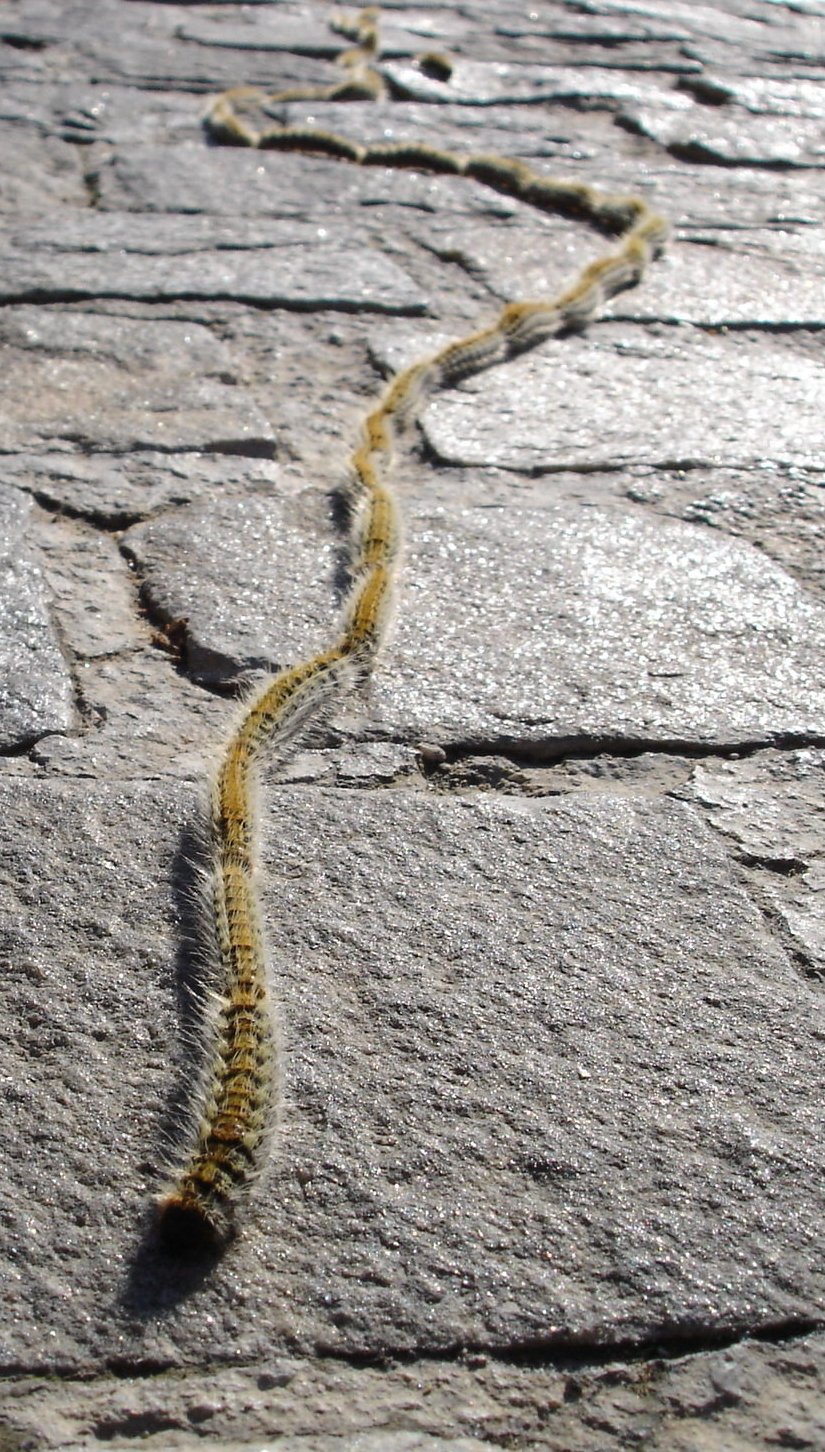
Pine Processionary Caterpillar hard
Thaumetopoea pityocampa
Moves nose-to-tail in long single-file processions. Its barbed hairs cause severe irritation, so nests are removed by hand from public parks.
-

Pink Fairy Armadillo impossible
Chlamyphorus truncatus
The smallest armadillo, about 10 cm, with a translucent shell flushed pink by blood vessels. It swims through loose sand rather than walking on it.
-

Pinocchio Anole impossible
Anolis proboscis
Thought extinct for 40 years until rediscovered in 2005. The male carries a long flexible nose horn he raises during display.
-

Platypus medium
Ornithorhynchus anatinus
An egg-laying, venomous, duck-billed mammal that hunts by detecting the electric fields of its prey. Read more →
-

Polar Bear easy
Ursus maritimus
Found across the circumpolar Arctic. Its five range states all border the sea ice it hunts seals from. Read more →
-

Proboscis Monkey hard
Nasalis larvatus
Endemic to one island shared by three countries. The male's pendulous nose amplifies his honking calls.
-

Przewalski's Horse hard
Equus ferus przewalskii
The last truly wild horse. Extinct in the wild by the 1960s and reintroduced to its native steppe from captive stock.
-

Purple Frog impossible
Nasikabatrachus sahyadrensis
Spends all but about two weeks a year underground, and was only described in 2003 despite being the sole survivor of a 100-million-year-old lineage.
-

Pyrenean Desman impossible
Galemys pyrenaicus
A semi-aquatic mole with a flexible trunk-like snout and webbed hind feet, hunting invertebrates in cold, fast mountain streams.
-
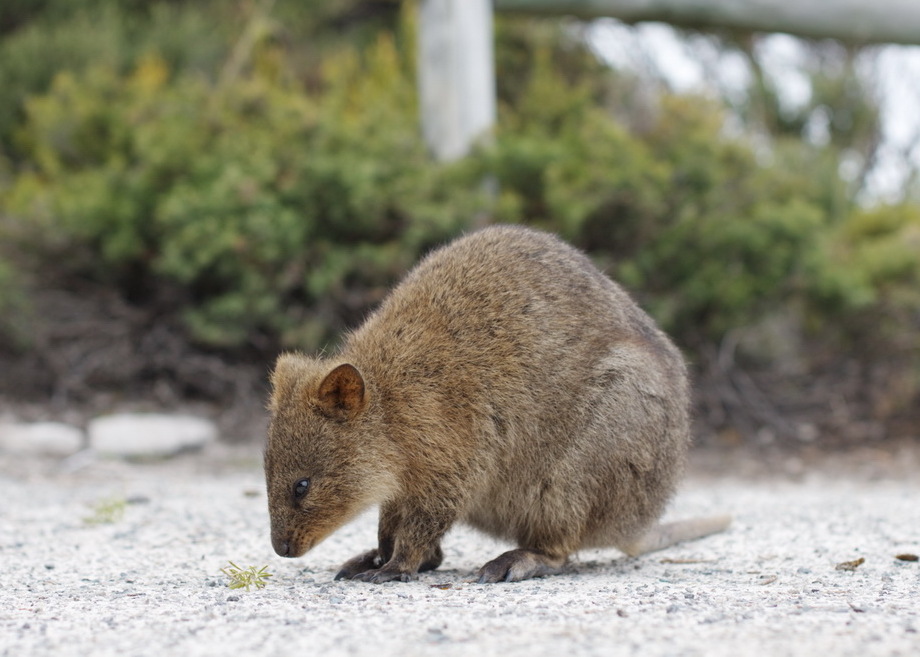
Quokka medium
Setonix brachyurus
A cat-sized wallaby whose resting face reads as a grin. Most survive on two predator-free islands off the southwest coast.
-

Red Fox easy
Vulpes vulpes
The most widely distributed wild carnivore on Earth. This is a representative slice of a native range covering most of the northern hemisphere.
-

Red Kangaroo easy
Osphranter rufus
The largest living marsupial, found across the arid interior of the mainland but absent from the wetter coastal fringes.
-

Red Panda medium
Ailurus fulgens
Not closely related to the giant panda at all, though it shares the bamboo diet and part of the mountain range. Read more →
-

Red-bellied Piranha medium
Pygocentrus nattereri
Shoals of them are mostly defensive, not predatory frenzies — the grouping protects against river dolphins and caimans.
-

Reindeer medium
Rangifer tarandus
Known as caribou in North America. Some herds make the longest overland migration of any land mammal.
-

Resplendent Quetzal hard
Pharomachrus mocinno
Sacred to the Maya and Aztecs, and the national bird and currency of one country in its range.
-

Reticulated Python medium
Malayopython reticulatus
The longest snake in the world, with reliable records past 6 metres. An excellent swimmer, which is how it reached so many islands. Read more →
-

Rhinoceros Hornbill hard
Buceros rhinoceros
The female seals herself inside a tree hollow with mud, leaving a slit through which the male feeds her until the chicks are grown.
-

Ring-tailed Lemur medium
Lemur catta
Like all lemurs it is endemic to a single island, and it favours the dry south and southwest rather than the rainforests.
-

Saddleback Caterpillar hard
Acharia stimulea
A bright green saddle on a brown body, ringed with venomous spines that deliver a sting comparable to a bee.
-

Saharan Horned Viper medium
Cerastes cerastes
Buries itself by shuffling sideways into sand until only the eyes and horns show, then waits for something to walk within reach.
-

Saharan Spiny-Tailed Lizard impossible
Uromastyx geyri
A desert lizard that blocks its burrow with a heavily armoured, spiked tail, and gets nearly all its water from the plants it eats.
-

Saiga Antelope hard
Saiga tatarica
That bulbous nose filters dust in summer and warms freezing air in winter. One country holds the overwhelming majority.
-

San Francisco Garter Snake hard
Thamnophis sirtalis tetrataenia
Turquoise, red and black, restricted to a few ponds on one peninsula, and immune to the toxin of the newts it eats.
-
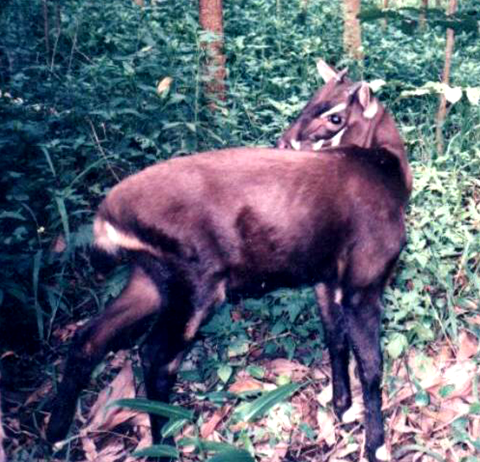
Saola impossible
Pseudoryx nghetinhensis
Discovered in 1992 and never reliably seen alive by a scientist in the wild. Nicknamed the Asian unicorn for how rarely it appears. Read more →
-

Satanic Leaf-Tailed Gecko impossible
Uroplatus phantasticus
Mimics a dead leaf down to the notched edges, blotches and curled tip, and stays motionless by day with its tail pressed flat to a twig.
-

Scarlet Macaw medium
Ara macao
Pairs mate for life and gather at riverbank clay licks to eat mineral-rich soil that neutralises toxins in unripe fruit.
-
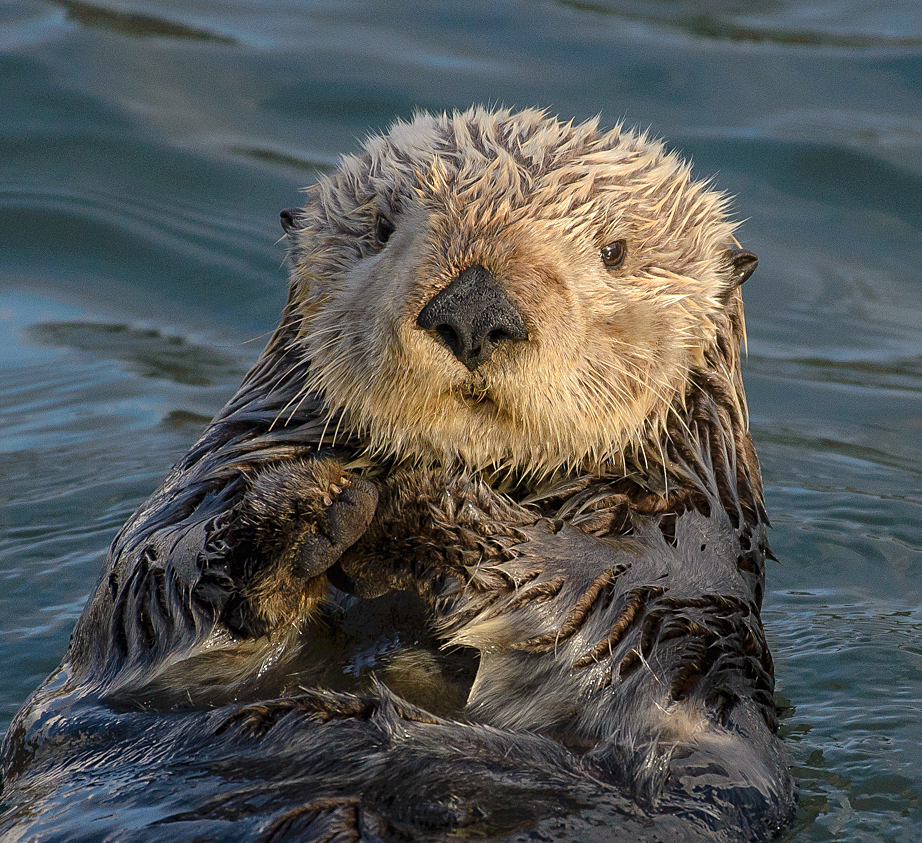
Sea Otter medium
Enhydra lutris
Has the densest fur of any animal — up to a million hairs per square inch — because it has no blubber to keep warm.
-

Shoebill hard
Balaeniceps rex
Stands 1.5 m tall with a bill like a wooden clog, stares motionless for hours, and greets its mate by machine-gun bill-clattering. Read more →
-

Short-Eared Dog impossible
Atelocynus microtis
The least known wild canid in the Americas, seen so rarely that basic facts about its behaviour are still guesswork.
-

Siberian Taimen hard
Hucho taimen
The largest salmonid in the world, up to two metres. Slow-growing and long-lived, so a single overfished river can take decades to recover.
-

Sidewinder medium
Crotalus cerastes
Throws its body sideways in looping arcs, keeping only two points touching scorching sand at any moment and leaving J-shaped tracks.
-

Slow Worm medium
Anguis fragilis
Neither a worm nor a snake but a legless lizard — it blinks, which no snake can do, and can shed its tail to escape.
-

Snow Leopard medium
Panthera uncia
Ranges across twelve countries of the high mountains of Central and South Asia, with roughly half the population in one of them. Read more →
-

Sockeye Salmon medium
Oncorhynchus nerka
Turns brilliant red and grows a hooked jaw to spawn, then dies within weeks. The rotting bodies fertilise the whole forest around the stream.
-

Southern Cassowary medium
Casuarius casuarius
Up to 1.8 m tall with a bony head casque and a dagger-like inner claw. It swallows fruit whole and is the main disperser of many rainforest trees.
-

Southern Pudú hard
Pudu puda
One of the world’s smallest deer at about 35 cm tall. It climbs fallen trunks to reach leaves and barks when alarmed.
-

Spider-Tailed Horned Viper impossible
Pseudocerastes urarachnoides
The tail tip is a near-perfect spider, complete with legs, waved to lure insect-eating birds within striking range. Only described in 2006.
-

Spiny Flower Mantis hard
Pseudocreobotra wahlbergii
Rears up to show two spiral eyespots on its wings, a startle display that buys it the moment needed to escape.
-

Spotted Handfish impossible
Brachionichthys hirsutus
Walks the seabed on modified fins rather than swimming, and is confined to the estuary and bays of a single river mouth.
-

Stalk-Eyed Fly impossible
Teleopsis dalmanni
Its eyes sit on the ends of long stalks, which it inflates by pumping air through its head after emerging. Males with wider eyespans win mates.
-

Streaked Shearwater hard
Calonectris leucomelas
Nests in burrows on offshore islands and ranges thousands of kilometres across the open Pacific between breeding seasons.
-

Sulu Hornbill impossible
Anthracoceros montani
Perhaps 20 breeding pairs remain on one island, making it among the most endangered birds in the world.
-

Sun Bear medium
Helarctos malayanus
The smallest bear, with a 25 cm tongue for raiding honey and termite nests, and a pale chest crescent said to look like a rising sun.
-

Sunda Colugo hard
Galeopterus variegatus
Neither lemur nor able to fly, it glides over 100 m on a membrane that stretches to its fingertips, toes and tail tip.
-

Sunda Pangolin hard
Manis javanica
Rolls into a ball of overlapping keratin scales that even a tiger cannot open — no defence at all against the hands that make it the most trafficked mammal on Earth.
-

Surinam Toad hard
Pipa pipa
Flat as a leaf. Eggs are embedded into the skin of the mother’s back, where they develop in pockets and emerge as fully formed toadlets.
-

Takahē impossible
Porphyrio hochstetteri
Declared extinct in 1898 and rediscovered in a remote mountain valley in 1948. A heavy, flightless, iridescent blue rail.
-

Takin hard
Budorcas taxicolor
A stocky goat-antelope that secretes an oily, strong-smelling coating over its whole body as natural rain protection.
-

Tasmanian Devil medium
Sarcophilus harrisii
The largest carnivorous marsupial left, confined to one island state after disappearing from the mainland centuries ago.
-

Tentacled Snake impossible
Erpeton tentaculatum
Two scaled tentacles on its snout sense water movement. It feints to make fish flee — directly into its jaws, which are already waiting.
-

Thorn Bug hard
Umbonia crassicornis
A treehopper disguised as a plant thorn. Mothers guard their young and drum on the stem to warn them of predators.
-

Thorny Devil medium
Moloch horridus
Channels between its scales draw water from damp sand to its mouth by capillary action, so it can drink through its feet.
-

Tiger easy
Panthera tigris
About three-quarters of all wild tigers live in one country, but the species also reaches the snowy Russian Far East. Read more →
-

Titan Beetle hard
Titanus giganteus
The largest known beetle at up to 17 cm. Adults never feed; they live only to mate, and their mandibles can snap a pencil.
-

Toco Toucan medium
Ramphastos toco
That enormous bill is mostly hollow and works as a radiator, dumping body heat rather than cracking nuts.
-

Tuatara hard
Sphenodon punctatus
Not a lizard but the sole survivor of an order that flourished alongside the dinosaurs, with a light-sensitive third eye. Read more →
-

Vampire Crab impossible
Geosesarma dennerle
Violet-bodied with glowing yellow eyes, and only formally described in 2015 after years in the aquarium trade with no known wild origin.
-

Vaquita impossible
Phocoena sinus
The most endangered marine mammal on Earth, restricted to the northern end of one gulf. Fewer than a dozen are thought to remain. Read more →
-
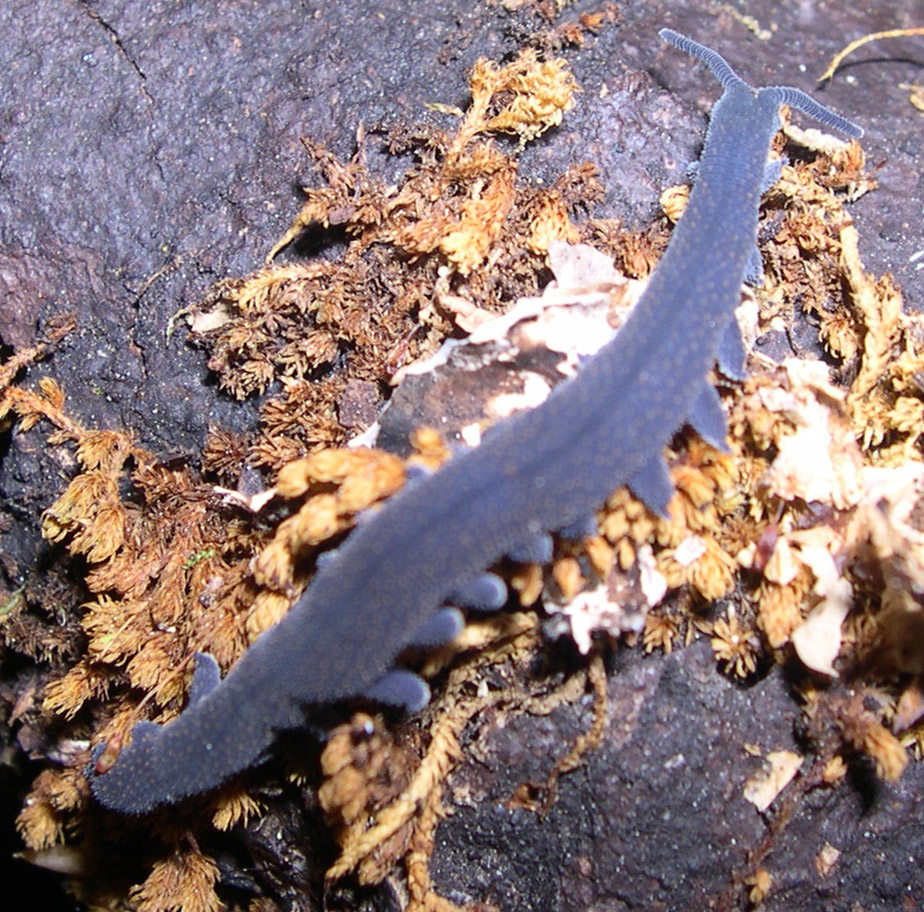
Velvet Worm hard
Onychophora
Hunts by firing two jets of instantly hardening slime over its prey. The lineage is around 500 million years old and barely changed. Read more →
-

Vicuña hard
Vicugna vicugna
Wild ancestor of the alpaca, grazing the high puna grasslands above 3,500 m. Its wool was once reserved for royalty.
-

Walia Ibex impossible
Capra walie
Confined to the cliffs of a single mountain massif, with a few hundred animals left. Nowhere else on Earth has it.
-

Walrus medium
Odobenus rosmarus
Uses its tusks to haul out onto ice and its sensitive whiskers to find clams on the seabed.
-

Wild Bactrian Camel hard
Camelus ferus
Fewer than a thousand remain in the Gobi. A separate species from the domesticated two-humped camel, and able to drink salt water.
-

Wolverine medium
Gulo gulo
The largest land-dwelling weasel, notorious for driving bears off carcasses despite weighing under 20 kg. Read more →
-

Woolly Bear Caterpillar medium
Pyrrharctia isabella
Folklore says the width of its brown band forecasts the winter. It really does survive being frozen solid, by producing its own cryoprotectant.
-

Yellow-Footed Rock-Wallaby hard
Petrogale xanthopus
Bounds across near-vertical rock faces and can descend a cliff at speed, using its long banded tail as a counterweight.
-
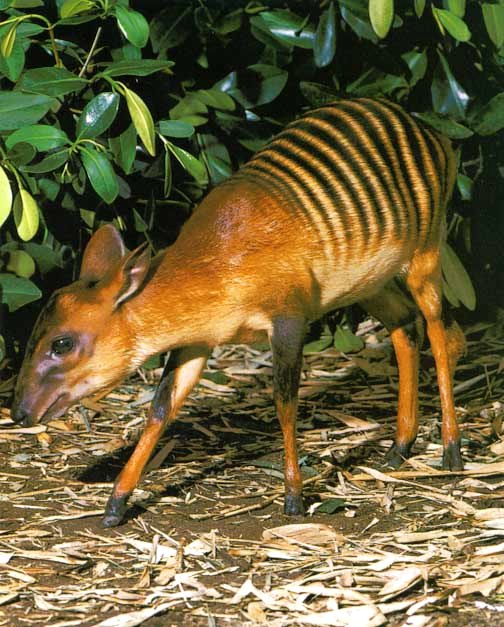
Zebra Duiker impossible
Cephalophus zebra
A small forest antelope with bold zebra striping across its back and a reinforced skull it uses to butt open hard fruit.


,_crop.jpg)


.jpg)
.jpg)

.jpg)

.jpg)
.jpg)


.jpg)
.jpg)
_(14641328165).jpg)
_(43875107345).jpg)
.jpg)

.jpg)


.jpg)


_cropped.jpg)


_female_Pieniny.jpg)
_male_Bia%C5%82owieza.jpg)


_male_2.jpg)
_male.jpg)


,_Natural_History_Museum,_London,_Mammals_Gallery.JPG)
.jpg)
_(48723186043).jpg)


emBonito.jpg)


_Rio_Napo.jpg)
,_Almuradiel,_Ciudad_Real,_Espa%C3%B1a,_2021-12-19,_DD_07.jpg)
.jpg)
.jpg)
.jpg)


_Mother_Grooms_Her_Young.jpg)


_Double_Haven_HK.jpg)


.JPG)
.jpg)
.jpg)


_Tswalu.jpg)


_(2687270083).jpg)


._Okapi.jpg)


_male_Nosy_Be.jpg)
.jpg)

_Bohol.jpg)


.jpg)
.jpg)
_Scottsdale.jpg)
.jpg)


.jpg)
.jpg)
![fir0002 flagstaffotos [at] gmail.com Canon 20D + Canon 70-200mm f/2.8 L](https://commons.wikimedia.org/wiki/File:Red_kangaroo_-_melbourne_zoo.jpg)


.jpg)


.jpg)

_-_uitsnede.jpg)


_Copan.jpg)
_(25169790524)_crop.jpg)


.jpg)


_male_Chiloe.jpg)


_(2532975946).jpg)

_female_3_crop.jpg)


.jpg)


_(cropped).jpg)


_larva.jpg)
.jpg)

Play Worml · Animal index · How to play · About the data · Privacy · Terms
Species ranges are simplified for gameplay and are not conservation data. Photographs are from Wikimedia Commons and credited to their photographers.